App Whitelisting vs. Traditional Content Filtering
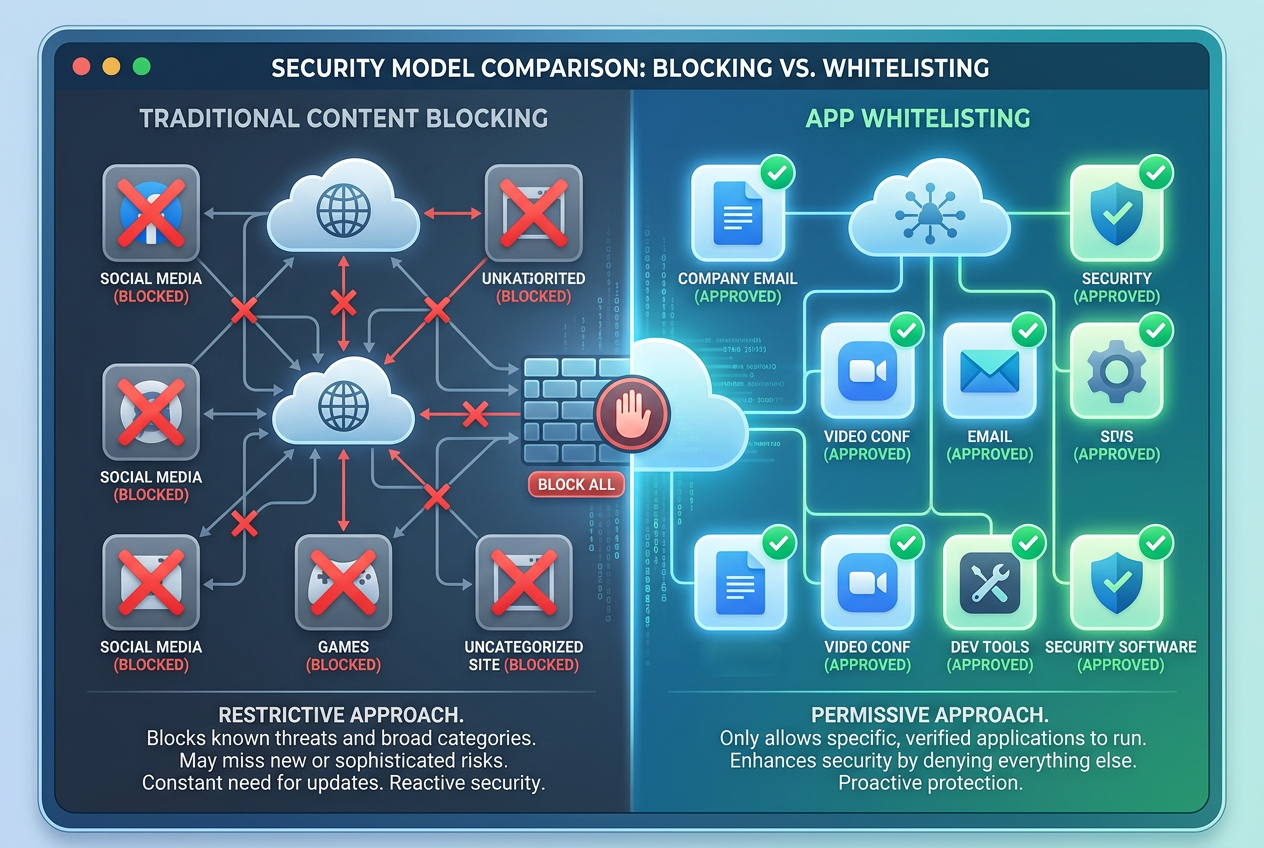
For years, schools and parents have relied on content filtering to protect children online. These systems work by identifying and blocking websites or applications considered inappropriate.
While filtering remains important, many organizations are discovering that blocking harmful content alone is no longer enough.
Today's digital environment requires a more proactive strategy.
That is where app whitelisting comes in.
Understanding Traditional Content Filtering
Content filtering operates by restricting access to known categories of websites and online resources.
Examples include:
- Adult content
- Gambling sites
- Violence-related content
- Certain social media platforms
Filtering helps reduce exposure to harmful material and remains an important component of digital safety.
However, it has limitations.
The internet changes rapidly. New applications and websites appear constantly. Maintaining comprehensive block lists can become an ongoing challenge.
In addition, many distractions fall outside traditional filtering categories.
What Is App Whitelisting?
App whitelisting reverses the traditional approach.
Instead of attempting to block everything inappropriate, schools and families define what is approved.
Only authorized applications and resources are accessible.
This creates a more controlled digital environment where students can focus on productive activities.
Why Schools Are Adopting Whitelisting
Educational institutions increasingly recognize the benefits of whitelisting.
First, it reduces distractions.
Students remain focused on approved educational tools rather than unrelated websites or applications.
Second, it simplifies management.
Administrators spend less time reacting to emerging threats because approved resources are already defined.
Third, it creates consistency.
Teachers, students, and parents understand which digital tools are available and why.
SafeClass Shield's Approach
SafeClass Shield combines traditional monitoring with advanced app-whitelisting capabilities.
Schools and families can create approved digital environments tailored to their specific needs.
Teachers gain confidence that devices support instruction.
Parents gain reassurance that children are engaging with appropriate content.
Administrators gain scalable oversight without excessive complexity.
Moving Beyond Reactive Protection
Digital safety should not depend entirely on blocking problems after they appear.
The most effective strategy is creating environments where productive behavior is encouraged from the start.
App whitelisting helps accomplish this goal by shifting the focus from restriction to intentional access.
SafeClass Shield empowers schools and families to build safer, more focused digital experiences through proactive control and intelligent oversight.
Stay Updated
Get the latest tips, guides, and updates on keeping kids safe online delivered to your inbox.